
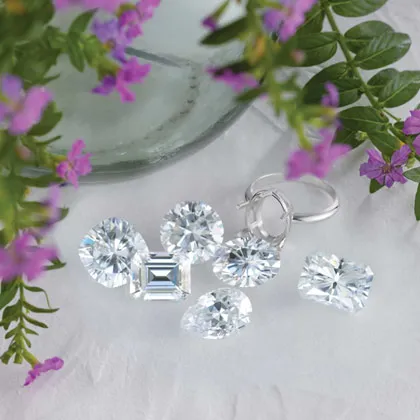
One of our passions here at Dickinson Jewelers is staying on top of trends in the jewelry world. We love researching and learning more about gemstones, then bringing that knowledge back to our amazing customers.
One of the coolest things we’ve learned more about recently is lab-grown diamonds. Lab-grown diamonds are actual diamonds, but they’re grown in a carefully controlled environment. They are much more ecofriendly than mining for natural-grown diamonds, and they come in a huge variety of sizes, colors, and shapes because they are grown in a lab and conditions can be controlled.
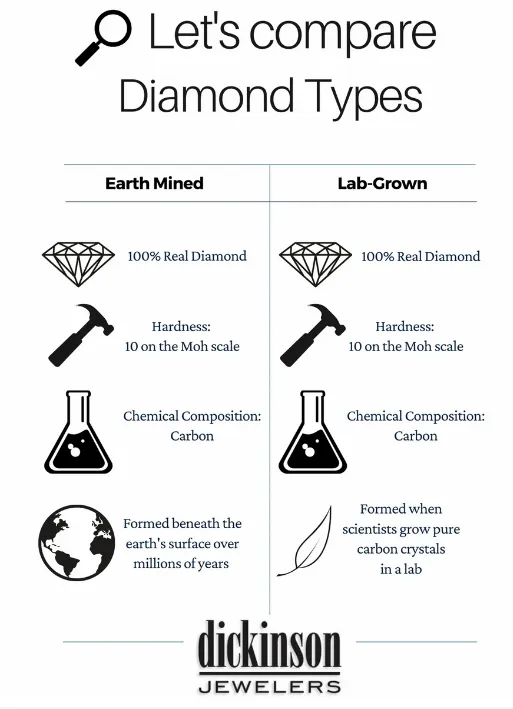
Many people are familiar with diamond substitutes, like cubic zirconia or moissanite. These less-expensive substitutes scratch, tarnish, and diminish in beauty because they aren’t true diamonds. However, lab-grown diamonds ARE true diamonds and don’t have these problems. They have the same hardness as a natural diamond and are virtually identical. Check out this comparison chart.
Yep, it’s true: lab-grown diamonds are diamonds. They are graded the same way natural diamonds are graded, using the 4 Cs (color, cut, clarity, and carat). Highly-trained gemologists with specialized tools can tell the difference between the two kinds of diamonds, but let’s be real: to the naked eye and under common microscopes, they’re identical-looking.
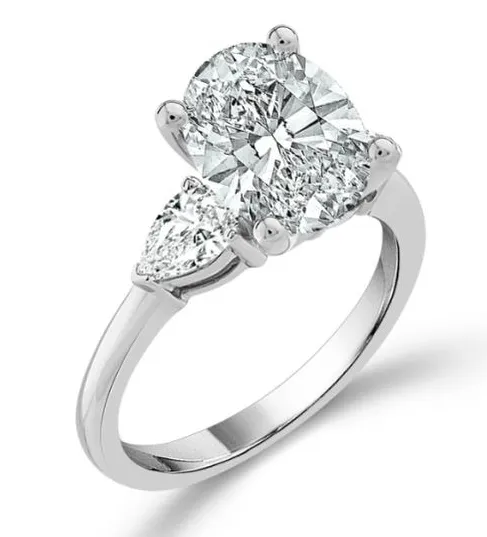
So, how are lab-grown diamonds made? There are two procedures that can grow diamonds: chemical vapor deposition (CVD) and high pressure, high temperature (HPHT). HPHT is essentially a sped-up version of how diamonds grow in the earth. CVD uses a chemical reaction to break carbon molecules apart and form them into diamonds. Both processes form a 100 percent real diamond.
Both processes also follow the same basic steps. A gemologist picks the best quality diamond seed and places it on a metal disk. Then, the seed is placed in a specialized chamber and allowed to grow for approximately 10-12 weeks. The diamond gets roughly cut using a laser before undergoing the same polishing and faceting procedure that is used on natural diamonds.
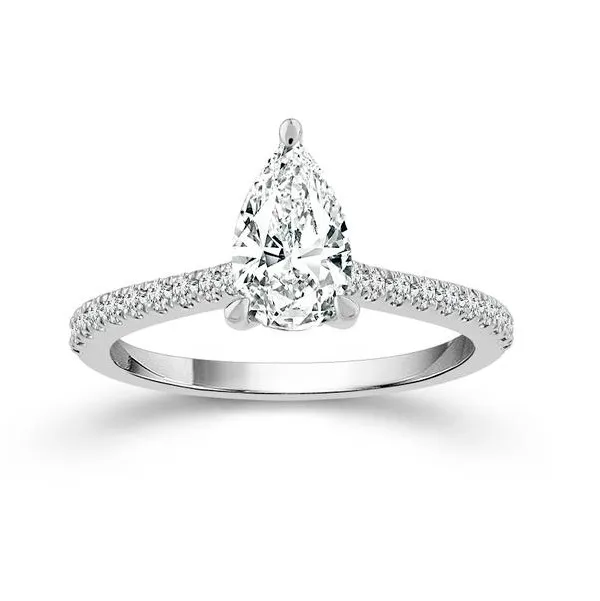
There is one key difference between lab-grown and naturally-occurring diamonds: the price. Lab-grown diamonds start at a lower price point because they are more cost-effective. We work with some of the world’s leading lab-grown diamond suppliers, so you can rest assured we’ll help you get your perfect diamond.
Ready to find your perfect diamond? Our jewelry stylists in Dunkirk and Prince Frederick are ready too! Stop by our stores or browse online to find the diamond that is perfect for you.
One of the coolest things we’ve learned more about recently is lab-grown diamonds. Lab-grown diamonds are actual diamonds, but they’re grown in a carefully controlled environment. They are much more ecofriendly than mining for natural-grown diamonds, and they come in a huge variety of sizes, colors, and shapes because they are grown in a lab and conditions can be controlled.
Many people are familiar with diamond substitutes, like cubic zirconia or moissanite. These less-expensive substitutes scratch, tarnish, and diminish in beauty because they aren’t true diamonds. However, lab-grown diamonds ARE true diamonds and don’t have these problems. They have the same hardness as a natural diamond and are virtually identical. Check out this comparison chart.
Yep, it’s true: lab-grown diamonds are diamonds. They are graded the same way natural diamonds are graded, using the 4 Cs (color, cut, clarity, and carat). Highly-trained gemologists with specialized tools can tell the difference between the two kinds of diamonds, but let’s be real: to the naked eye and under common microscopes, they’re identical-looking.
So, how are lab-grown diamonds made? There are two procedures that can grow diamonds: chemical vapor deposition (CVD) and high pressure, high temperature (HPHT). HPHT is essentially a sped-up version of how diamonds grow in the earth. CVD uses a chemical reaction to break carbon molecules apart and form them into diamonds. Both processes form a 100 percent real diamond.
Both processes also follow the same basic steps. A gemologist picks the best quality diamond seed and places it on a metal disk. Then, the seed is placed in a specialized chamber and allowed to grow for approximately 10-12 weeks. The diamond gets roughly cut using a laser before undergoing the same polishing and faceting procedure that is used on natural diamonds.
There is one key difference between lab-grown and naturally-occurring diamonds: the price. Lab-grown diamonds start at a lower price point because they are more cost-effective. We work with some of the world’s leading lab-grown diamond suppliers, so you can rest assured we’ll help you get your perfect diamond.
Ready to find your perfect diamond? Our jewelry stylists in Dunkirk and Prince Frederick are ready too! Stop by our stores or browse online to find the diamond that is perfect for you.