
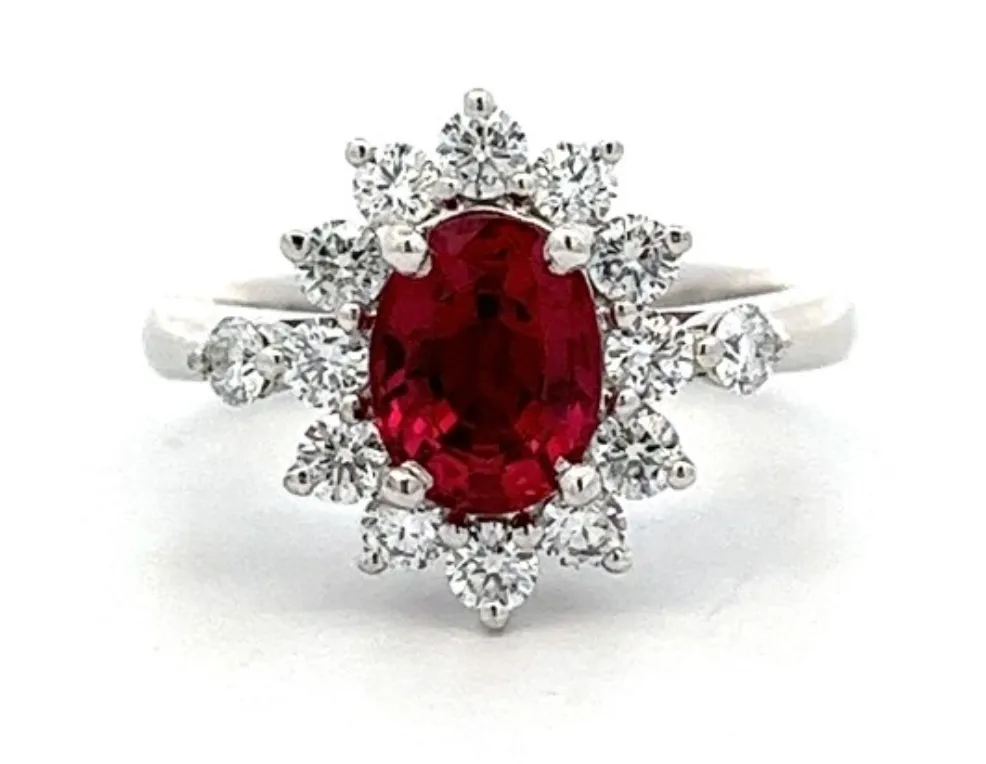
July babies, we see you — and honestly, we're a little jealous. You get to claim one of the most dazzling, dramatic, and history-rich gemstones in the entire jewelry box: the ruby.
If you've got a July birthday on your calendar (or you're already plotting a gift for someone who does), let's talk about why this deep red stone has been stopping people in their tracks for thousands of years.
A Stone Fit for Kings (Literally)
Rubies have been prized for so long that they show up in some of the oldest jewelry-related writing we have. Ancient Sanskrit texts called the ruby "ratnaraj," which basically translates to "king of gems" — and that's not an exaggeration. For centuries, rubies were believed to be even more valuable than diamonds, gem for gem.
Burmese warriors reportedly carried rubies into battle, tucking them under their skin or into their armor, believing the stone would make them invincible. Medieval Europeans thought wearing a ruby granted its owner health, wealth, wisdom, and success in love. And in Hindu tradition, rubies were considered so precious that offering one to the god Krishna was believed to guarantee rebirth as an emperor.
Rubies and the "Glowing Coal" Myth
Here's one of our favorite ruby legends: for a long time, people genuinely believed rubies glowed from within — like a smoldering coal that never went cold. Some old stories even claim rubies were used to signal danger, supposedly darkening in color when trouble was near and returning to their normal brilliance once the danger passed.
Of course, we know now that a ruby's fire comes from chromium — the same trace element that gives the stone its signature red glow. But you have to admit, "glowing ember that warns you of danger" is a pretty great origin story for a gemstone.
What Makes a Ruby a Ruby
Rubies are actually a variety of the mineral corundum — the very same mineral family as sapphires! The only difference between the two is the trace elements inside them. Add chromium, and you get red. Add other minerals like iron or titanium, and you get blue, yellow, or pink sapphires instead.
Because rubies form deep underground under intense heat and pressure, high-quality natural rubies are actually rarer than diamonds. That deep, vivid red color you're picturing right now? Jewelers call the most prized shade "pigeon blood red," and it's the gold standard (well, ruby standard) for the stone.
Modern Meaning: Passion, Protection, and Love
Today, rubies are still associated with a lot of what they symbolized centuries ago: passion, courage, and protection. They're also a traditional gift for 40th wedding anniversaries, which makes them a beautiful way to celebrate a love that's stood the test of time — right alongside a July birthday.
Whether you're celebrating a birthday, an anniversary, or just because rubies are objectively gorgeous, there's a reason this stone has held its "king of gems" title for thousands of years.
Two Ruby Pieces We're Loving Right Now
If you're ready to bring a little ruby magic into your own jewelry box (or someone else's), here are two pieces currently catching our eye in the case:
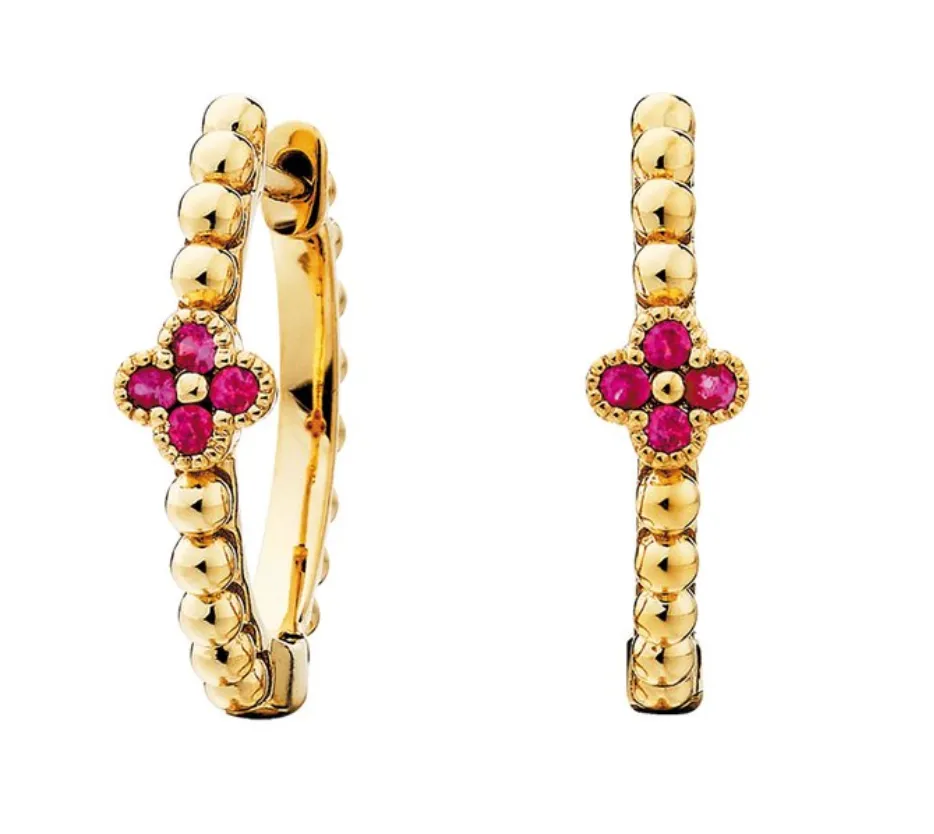
These hoop earrings pair warm yellow gold with a ruby quatrefoil design and delicate beaded detailing. They're eye-catching without being over the top — perfect for someone who wants their birthstone to make a statement at the office and at dinner.
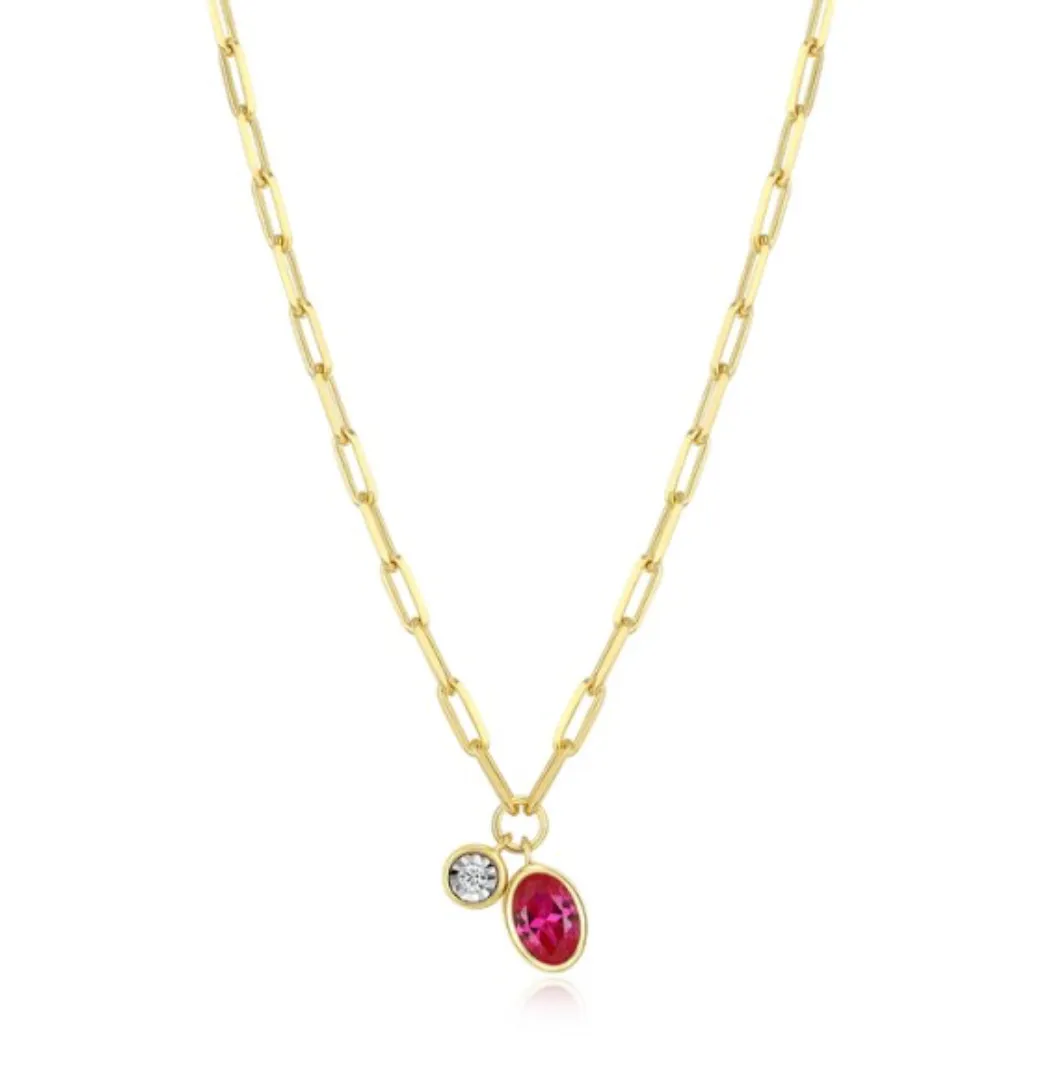
This necklace pairs lab-grown ruby with lab diamond accents on a 14k gold-plated chain for a piece that sparkles as much as it symbolizes. It's a gorgeous, wearable-every-day way to carry your birthstone (or your favorite July baby's) close.
Come See Them In Person
Photos only tell half the story with a stone this fiery — rubies really do come alive under the light. Stop by our Prince Frederick or Dunkirk showroom and let us pull a few pieces for you to try on. Whether you're treating yourself for your birthday or picking out a gift for a July-born someone special in Calvert County, we'd love to help you find the one that catches your eye the way a good ruby should.
If you've got a July birthday on your calendar (or you're already plotting a gift for someone who does), let's talk about why this deep red stone has been stopping people in their tracks for thousands of years.
A Stone Fit for Kings (Literally)
Rubies have been prized for so long that they show up in some of the oldest jewelry-related writing we have. Ancient Sanskrit texts called the ruby "ratnaraj," which basically translates to "king of gems" — and that's not an exaggeration. For centuries, rubies were believed to be even more valuable than diamonds, gem for gem.
Burmese warriors reportedly carried rubies into battle, tucking them under their skin or into their armor, believing the stone would make them invincible. Medieval Europeans thought wearing a ruby granted its owner health, wealth, wisdom, and success in love. And in Hindu tradition, rubies were considered so precious that offering one to the god Krishna was believed to guarantee rebirth as an emperor.
Rubies and the "Glowing Coal" Myth
Here's one of our favorite ruby legends: for a long time, people genuinely believed rubies glowed from within — like a smoldering coal that never went cold. Some old stories even claim rubies were used to signal danger, supposedly darkening in color when trouble was near and returning to their normal brilliance once the danger passed.
Of course, we know now that a ruby's fire comes from chromium — the same trace element that gives the stone its signature red glow. But you have to admit, "glowing ember that warns you of danger" is a pretty great origin story for a gemstone.
What Makes a Ruby a Ruby
Rubies are actually a variety of the mineral corundum — the very same mineral family as sapphires! The only difference between the two is the trace elements inside them. Add chromium, and you get red. Add other minerals like iron or titanium, and you get blue, yellow, or pink sapphires instead.
Because rubies form deep underground under intense heat and pressure, high-quality natural rubies are actually rarer than diamonds. That deep, vivid red color you're picturing right now? Jewelers call the most prized shade "pigeon blood red," and it's the gold standard (well, ruby standard) for the stone.
Modern Meaning: Passion, Protection, and Love
Today, rubies are still associated with a lot of what they symbolized centuries ago: passion, courage, and protection. They're also a traditional gift for 40th wedding anniversaries, which makes them a beautiful way to celebrate a love that's stood the test of time — right alongside a July birthday.
Whether you're celebrating a birthday, an anniversary, or just because rubies are objectively gorgeous, there's a reason this stone has held its "king of gems" title for thousands of years.
Two Ruby Pieces We're Loving Right Now
If you're ready to bring a little ruby magic into your own jewelry box (or someone else's), here are two pieces currently catching our eye in the case:
These hoop earrings pair warm yellow gold with a ruby quatrefoil design and delicate beaded detailing. They're eye-catching without being over the top — perfect for someone who wants their birthstone to make a statement at the office and at dinner.
This necklace pairs lab-grown ruby with lab diamond accents on a 14k gold-plated chain for a piece that sparkles as much as it symbolizes. It's a gorgeous, wearable-every-day way to carry your birthstone (or your favorite July baby's) close.
Come See Them In Person
Photos only tell half the story with a stone this fiery — rubies really do come alive under the light. Stop by our Prince Frederick or Dunkirk showroom and let us pull a few pieces for you to try on. Whether you're treating yourself for your birthday or picking out a gift for a July-born someone special in Calvert County, we'd love to help you find the one that catches your eye the way a good ruby should.